Heat-meter battery sizing is an average-power calculation with a precision-analogue constraint attached. This paper works through the method a meter OEM follows with a battery supplier: choose the chemistry on energy, pulse cleanliness and warm-environment behaviour; build the average-current budget from the measurement cadence and the radio schedule; size a pulse reservoir that protects time-of-flight accuracy; and design the charge and thermal management so a nickel-metal hydride reservoir lasts in a heating cabinet.
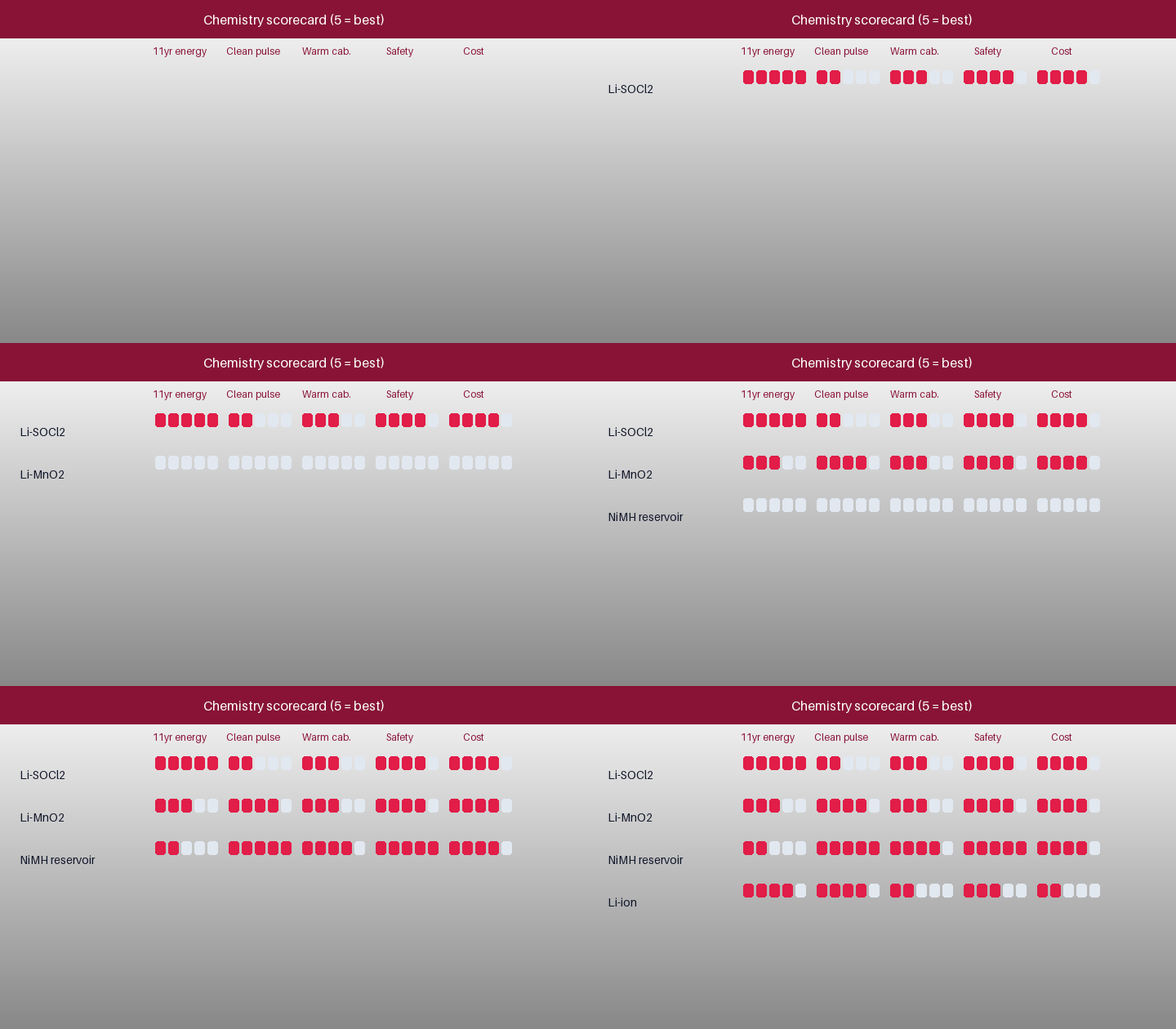
The animated scorecard rates primary Li-SOCl2, Li-MnO2, a NiMH pulse reservoir, a supercapacitor and rechargeable Li-ion on long-term energy, pulse current and voltage stability for the ultrasonic front-end, behaviour in a warm cabinet, intrinsic simplicity and cost. Primary lithium wins energy and shelf life but its ageing impedance threatens the precision rail; the supercapacitor cleans the rail but holds little energy; rechargeable lithium adds a BMS and thermal questions in a warm enclosure; the NiMH reservoir combines a flat, low-impedance pulse supply with useful energy and simple controlled charging.
The robust architecture is again a hybrid - a primary lithium energy cell plus a small NiMH (or, for minimal peaks, supercapacitor) reservoir - with the analogue and radio loads drawn from the stable reservoir rail.
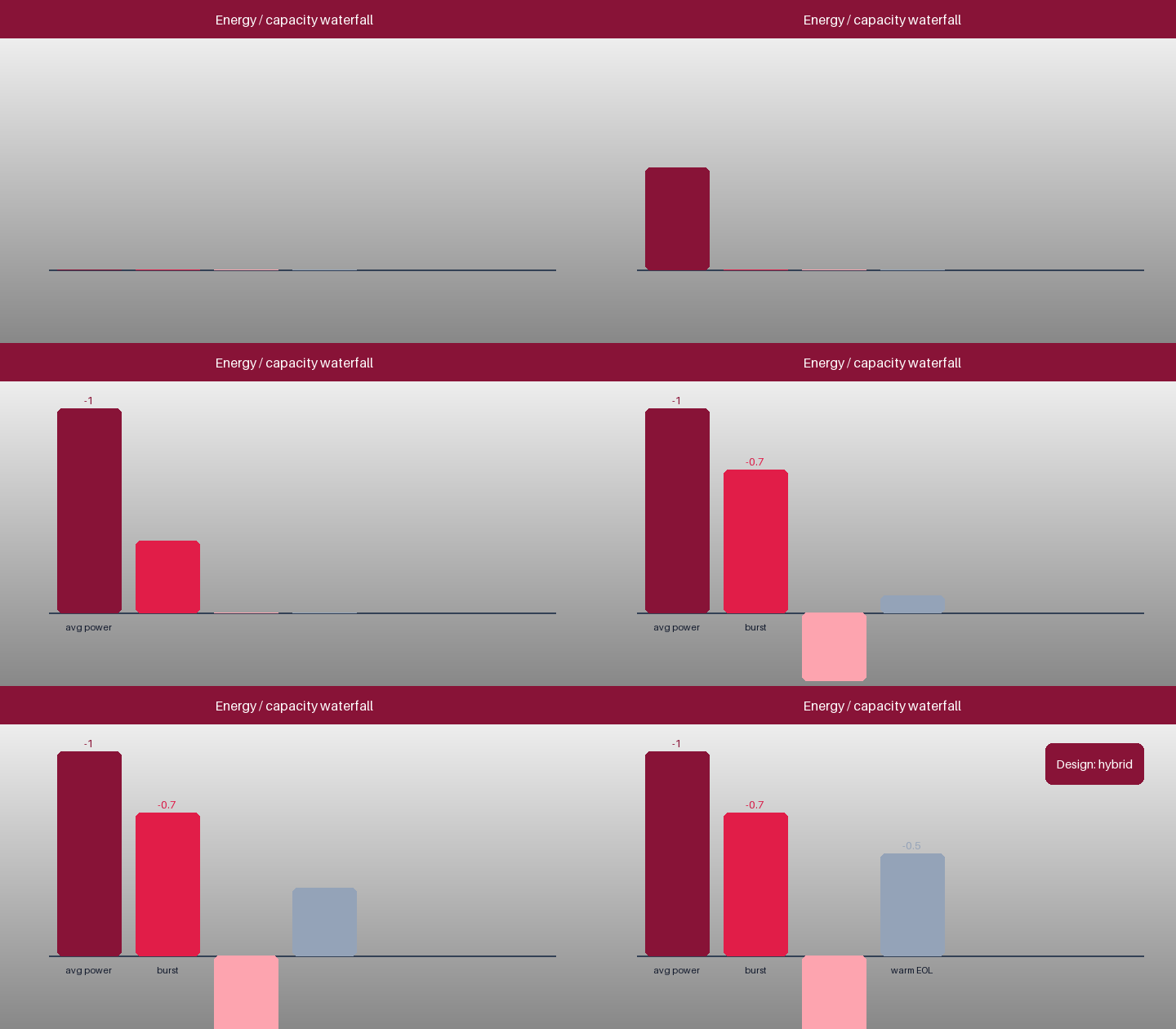
Convert every state to charge per day: sleep current across the full period, ultrasonic burst current times burst duration times measurements per day (which scales inversely with the chosen interval), paired temperature-sensor excitation per measurement, calculator processing, and the radio or optical readout per report. Sum to an equivalent continuous current and grow by self-discharge and an end-of-life margin.
The second animated figure is the energy waterfall: the sleep floor, the ultrasonic-measurement contribution that grows as the interval shortens, the temperature-sensing contribution, the radio contribution, empty-pipe savings shown as a credit, self-discharge in the warm cabinet and the end-of-life margin, ending at the required primary-cell capacity.
The pulse reservoir is sized not only for the radio but for the ultrasonic time-of-flight burst, because a drooping supply shifts the nanosecond timing that determines flow accuracy. Require the reservoir voltage to stay inside the analogue front-end's tolerance through the burst, across the primary cell's aged impedance and across temperature, with margin for the radio transmission that often follows a measurement in the same wake cycle.
NiMH's flat 1.2 V plateau and low internal resistance deliver a notably clean pulse rail, and unlike a supercapacitor the reservoir carries enough energy to chain measurement, integration and transmission without recharging between them.
Heating-substation temperatures drive two decisions. First, choose cells rated for the cabinet class and derate capacity for the sustained warmth; second, charge the NiMH reservoir in controlled pulses with a thermistor cut-back near 45 C rather than applying a permanent trickle, because continuous high-temperature charging gases the cells. Position the pack away from hot pipework and provide modest ventilation in the meter body.
These rules let a NiMH reservoir exploit the warmth (good discharge kinetics) without suffering its main risk (high-temperature overcharge), a balance a sealed-for-life primary design does not have to strike but a hybrid design must.
Many heat meters are accessible in plant rooms rather than buried, so a serviceable, replaceable or rechargeable NiMH module is practical: it can be refreshed during meter reading or powered from a bus/mains supply during the heating season, reducing reliance on a primary cell. Where a meter harvests from the flow or an external supply, NiMH becomes the principal short-term store, cycling between charge and the measurement/radio load.
Welded tabs, a fuse, an NTC and a conformal-coated pack suit the warm, sometimes-condensing substation environment and keep contact resistance stable across the service life.
Record the measurement interval and empty-pipe logic, the burst and radio currents, the cabinet temperature class, the charge regime and every derating. For a fully sealed, never-serviced meter keep primary lithium as the energy store and NiMH as the protected pulse layer; for serviceable or externally powered meters NiMH can carry more. Paper C validates the design against EN 1434, MID and the IEC/UN cell evidence.
Weijiang Power supplies sealed nickel-metal hydride cells and pulse-assist modules for ultrasonic heat meters and thermal energy sub-metering. Tell us your measurement interval, radio profile, temperature class and design life, and our engineers will design a welded NiMH pulse reservoir or service module matched to the primary lithium cell and warm heating-cabinet environment. Review formats on the products page.


